While reading the book Powers and Thrones: A New History of the Middle Ages, I was reminded of the creatively honest naming tradition applied to royalty and other officials — monks like Alweald the Bald, chieftains like Siward the Fat, and rulers whose epithets doubled as character references.
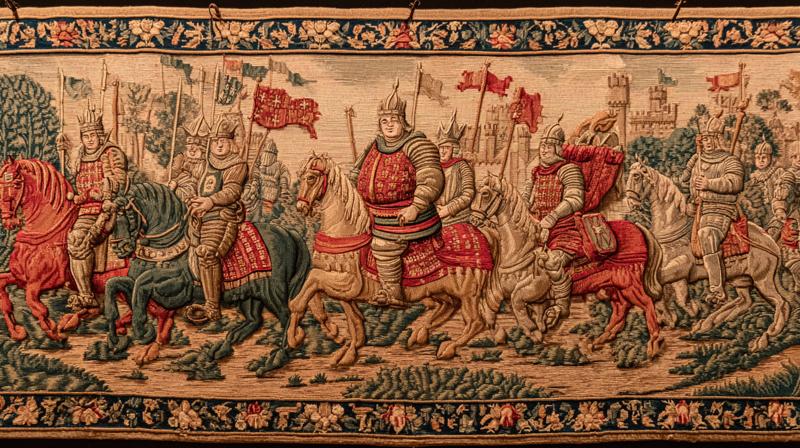
Bring Back the Balds, the Fats, and the Unreadies
History has given us no shortage of rulers with names that inspire awe. Chief among them: Charles the Great, better known as Charlemagne. “The Great” is the sort of epithet you’d want on your résumé, LinkedIn profile, and gravestone. But not everyone in his family was so fortunate.
Take his descendant Charles the Bald. Nothing says “towering imperial majesty” like being immortalized as the guy without hair. Or consider Charles the Fat, who, despite running much of Europe, sounds less like a Holy Roman Emperor and more like the unfortunate star of a Renaissance diet pamphlet. Across the Channel, the English gave us Ethelred the Unready, a name that makes him sound like a student who didn’t do the homework, rather than a king of England.
Other gems:
-
Louis the Stammerer: who apparently struggled more with speech than with ruling.
-
Alfonso IX, Baboso (the Slobberer): king of León and Galicia, known for foaming at the mouth when upset.
-
Philip the Amorous: hard to say whether that was flattering or just court gossip gone official.
-
William the Bastard: later rebranded more tastefully as William the Conqueror (proof that good PR has a long history).
-
John Lackland: the youngest son of Henry II of England, famous for losing land and earning a name that basically means “the family screw-up.”
-
Ivar the Boneless: a Viking leader whose medical condition gave him a name equal parts terrifying and tragicomic.
-
Ivan the Terrible: his PR team apparently leaned all the way in on the menace factor.
-
Haakon the Crazy: king of Norway, whose epithet makes him sound more like a pro-wrestler than a monarch.
-
Justinian Slit-Nosed: had his nose amputated by the usurper Leontius around 695 CE and was exiled, but later returned to power, minus the nose.
-
John the Pitiless: a bishop-turned-nobleman who earned his epithet in 1408, when he suppressed a rebellion in Liège with such thoroughness that contemporary chroniclers ran out of polite words. His collaborator was John the Fearless, Duke of Burgundy, which means two men with unflattering nicknames were jointly responsible for one massacre. History has a sense of symmetry.
One wonders if these men would have been remembered differently if their chroniclers had chosen more dignified adjectives. Imagine how history would read if Charles the Fat had been dubbed Charles the Magnificent. But no; posterity is cruel and hairlines crueler.
When the Nickname Flatters
Not every medieval ruler got saddled with an embarrassing epithet. Some came out rather well — or seemed to, depending on the language.
Lorenzo de’ Medici, who took over the family banking and political operation in Florence in 1469, acquired the nickname il Magnifico. This sounds impressive until you discover that magnifico was a standard honorific for any wealthy Florentine notable, roughly equivalent to calling someone “Distinguished.” Lorenzo happened to be genuinely distinguished, so the title fit, but it was about as individualized as a name badge at a conference.
Charles the Bold, Duke of Burgundy and son of Philip the Good, sounds like a compliment — until you read the French. His actual epithet was Charles le Téméraire, which translates more accurately as “the Reckless” or “the Rash.” English translators softened this to “the Bold,” which is technically defensible but misses the spirit of the original assessment. Charles died at the Battle of Nancy in 1477, having launched one too many aggressive campaigns, which largely vindicates the French version.
The lesson is that even the flattering nicknames, when you look closely enough, tend to tell an honest story.
A Modest Proposal
In our modern age of spin doctors and slogans, this blunt honesty feels refreshing. It is time to revive this tradition for our modern rulers. Forget poll-tested slogans and carefully managed branding. Give leaders names that truly reflect how posterity will remember them:
-
Donald the Fat: though “Donald the Litigious” might be equally fitting.
-
Vladimir the Poisoner: no explanation needed.
-
Musk the Mercurial: emperor of Mars (pending), Twitter (regrettably), and random late-night ideas.
-
Xi the Eternal: with undertones equal parts flattering and ominous.
-
Charles the Sustainable: king of England, eco-warrior, and sworn enemy of leaky pens.
The Legislative Branch
Congress offers equally rich possibilities: “Mitch the Obstructionist,” “Bernie the Unmoved,” “Marjorie the Conspiratorial.” Imagine C-SPAN with subtitles like that. Ratings solved.
The Case for Honest Nicknames
This system would simplify history textbooks, keep politicians humble, and provide voters with daily entertainment. Best of all, it guarantees honesty: no amount of campaign spin will save you from being remembered as the Clueless, the Boring, or the Constipated.
In a world addicted to branding, nothing could be more honest, or more entertaining, than calling our rulers what they are. The medieval chroniclers knew something we have forgotten: hairlines, waistlines, and temperaments outlast any campaign promise.
References
Jones, Dan. Powers and Thrones: A New History of the Middle Ages. New York: Viking, 2021.
Unger, Miles J. Magnifico: The Brilliant Life and Violent Times of Lorenzo de’ Medici. New York: Simon & Schuster, 2008.
Vaughan, Richard. John the Fearless: The Growth of Burgundian Power. London: Longmans, 1966.
Vaughan, Richard. Philip the Good: The Apogee of Burgundy. London: Longmans, 1970.
Vaughan, Richard. Charles the Bold: The Last Valois Duke of Burgundy. London: Longmans, 1973.
Vaughan, Richard. Valois Burgundy. London: Allen Lane, 1975.
Leyser, Karl. “Ottonian Government.” The English Historical Review 96, no. 381 (1981): 721–753.